Rethinking The Egg Flat: Why Straw Pulp Is Winning The Battle Against Transit Breakage
Leave a message
Let's talk about a headache every commercial egg producer knows too well: shipping damage. When you're moving hundreds of thousands of eggs through a modern supply chain, you aren't just selling eggs-you're managing risk. One rough road, one poorly stacked pallet, and suddenly you're dealing with a mess of cracked shells and rejected shipments.
For a long time, procurement managers had two basic choices. Go with cheap recycled paper and pray the humidity doesn't ruin the trays, or use plastic and face the wrath of upcoming regional packaging bans.
But things have changed. Advanced material science has brought a third option to the table: straw pulp egg flats. And honestly? They are disrupting the entire logistics game.
The Reality of Cold-Chain Logistics (And Why Standard Trays Fail)
Here is the problem with standard packaging. Eggs go into cold storage, get loaded onto a truck, and head out for delivery. The moment that truck hits a warm loading dock, condensation sets in.
Standard paper trays absorb that moisture like a sponge. They soften, lose their structural integrity, and the next thing you know, the perimeter cells buckle under the weight of the pallet. On the flip side, plastic offers zero shock absorption. Every bump on the highway transfers straight into the eggshells.
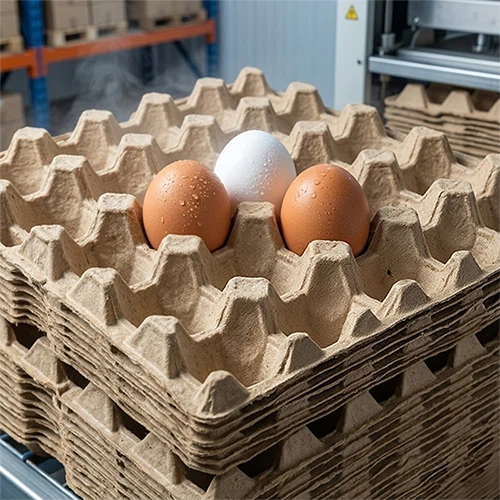
To protect your margins, you need sturdy 30-cell egg flats that can actually handle the realities of a harsh supply chain.
Why Agricultural Fibres are Changing the Game
By utilizing the natural, long fibers found in wheat and straw byproducts, biodegradable egg flats offer some distinct mechanical advantages that traditional molded pulp simply can't match.
Natural Shock Absorption: Straw fiber creates a dense, interlocking matrix. It doesn't snap like brittle plastic, and it doesn't sag like cheap paper. It acts like a shock absorber, absorbing road vibrations before they reach the product.
True Moisture Resistance: Modern straw pulp formulations are specifically engineered to resist the structural collapse caused by humidity fluctuations. They stay rigid, even when moving through intense cold-chain transitions.
Flawless De-nesting: If your facility runs high-speed automated packing lines, you know that a single jammed tray can throw off your entire daily schedule. High-quality wholesale egg flats made from straw pulp feature clean, precise draft angles. They separate smoothly on automated lines without sticking, keeping your line efficiency right where it needs to be.
Staying Ahead of Regulatory Liabilities
Let's look past the warehouse for a second. The regulatory landscape for packaging is changing faster than ever. Between the EU's PPWR updates and strict plastic taxes expanding across North America, importing plastic carriers is quickly becoming a financial liability.
Switching to an eco-friendly option isn't about looking good on paper anymore-it's about future-proofing your business. Using agricultural waste directly reduces your Scope 3 emissions and completely removes the landfill tax burden for your retail buyers.
The Bottom Line
At the end of the day, packaging efficiency comes down to a single metric: delivered yield. How many of your eggs arrived at the destination in pristine condition?
By upgrading to high-performance straw pulp egg flats, you stop paying for transit damage and start investing in a reliable, compliant supply chain that handles the pressure of the modern market.