Eco-Friendly Packaging: A Practical Guide to Reducing Your Carbon Footprint
Leave a message
Let's be honest. "Eco-friendly" is everywhere. As a buyer or brand manager, you're bombarded with claims that often feel vague. Your customers are getting savvier too; they can spot empty "greenwashing" from a mile away. So, how do you make a genuine environmental impact that also makes business sense?
The answer might be sitting right in your warehouse or on your shelf: your packaging.
Forget abstract goals. Think about the real, measurable metric that matters today: carbon footprint. Every step of a package's life-from raw material extraction to its sad end in a landfill-emits CO2. Traditional materials like virgin plastics and foams are carbon-heavy giants in this story.
The good news? A new wave of smart, sustainable packaging materials is turning the page. This isn't just about being "less bad." It's about choosing materials that actively pull carbon out of the waste cycle, backed by a genuine, circular story you can be proud of.
The Hidden Carbon Cost of Your Current Packaging
Why focus on carbon? Because it's the core of the climate challenge. A 2023 WEF report highlighted that packaging accounts for a significant portion of a product's lifecycle emissions, especially in food and beverage. Virgin plastic, for instance, is made from fossil fuels and has an energy-intensive production process. Even paper, if not from responsible sources, drives deforestation-a major carbon release.
The real cost isn't just the material price; it's the carbon cost embedded in it, and increasingly, the reputational cost to your brand.

Beyond Recycling: The Next Generation of Materials
Recycled content is a good first step, but it's not the end game. The next level is using annually renewable or waste-based resources that require minimal processing. Here's a look at the science and sense behind two game-changers:
1. Bamboo Fiber: The Rapid-Renewable Workhorse
Bamboo isn't just for pandas. It's a grass that grows incredibly fast-up to a foot a day-sequestering carbon as it grows, and regenerates from its own root system after harvest. No replanting needed, no fertilizers required.
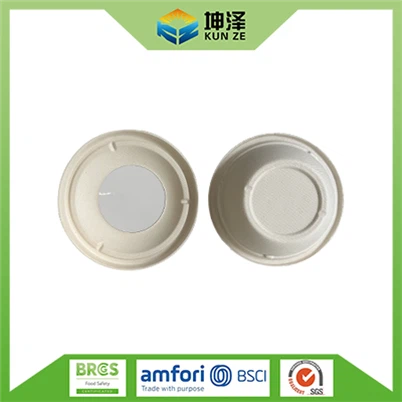
When processed into fiber for packaging, it creates remarkably strong, heat-resistant, and aesthetically pleasing products. A bamboo fiber coffee cup holder, for example, isn't just a cute alternative. It's a carbon-negative story in your customer's hand: it grew quickly using sunlight, replaced a plastic or virgin paper sleeve, and will compost back into soil. The same goes for bamboo fiber food trays. They offer a high-end, sturdy feel for takeout or retail display, directly combating the carbon footprint of black plastic or aluminum trays. They tell your customer you care about detail from the product to the package.
2. Straw Pulp: Turning Agricultural Waste into Gold
Here's the kicker: what if your packaging could solve another industry's waste problem? After grains like wheat are harvested, millions of tons of straw residue are often burned, creating massive air pollution and carbon emissions.
Innovative pulping technology now transforms this agricultural waste into durable, molded fiber packaging. Take straw pulp egg boxes. They protect eggs just as well as foam or plastic, but their lifecycle is radically different. They divert waste from burning, use less energy to produce than paper pulp, and are fully compostable. It's a brilliant, circular solution that directly lowers net carbon emissions.
Making the Switch: A Practical Guide for Buyers
This isn't about a symbolic gesture. It's a strategic procurement decision. Here's how to think about it:
Start with Your High-Volume Items: Identify your most used packaging component. Is it cup carriers? Takeout containers? Replacing that one item has the biggest impact.
Ask for Certifications: Look for credible proof like compostability certifications (e.g., BPI, DIN CERTCO) or FSC certification for wood-based products. This is your shield against "greenwashing" claims.
Calculate the Total Impact: Consider the reduced carbon footprint in shipping (many of these materials are lighter) and the positive end-of-life scenario (commercial composting vs. centuries in a landfill).
Tell the Story: Don't hide it. Use clear, simple messaging on your packaging or website: "This tray is made from plant-based bamboo fiber, helping us reduce our carbon footprint." It converts your packaging into a powerful marketing touchpoint.
The Bottom Line
In today's market, your packaging carbon footprint is a direct reflection of your brand's integrity. Moving to materials like fast-growing bamboo fiber and waste-based straw pulp is a clear, actionable, and commercially smart decision.
It's no longer just about "being green." It's about being resilient, responsible, and relevant to the future your customers are demanding.
Ready to explore packaging that carries your product and your values? Discover our high-performance, low-carbon solutions designed for forward-thinking businesses. Let's talk about how you can make the switch.