Bamboo Fiber Vs. Sugarcane Bagasse: Which One Wins For Heavy-Duty Food Packaging?
Leave a message
When it comes to plant-based packaging, the market is currently dominated by two heavyweights: Sugarcane Bagasse and Bamboo Fiber.
While both are superior to plastic in terms of sustainability, they are not created equal. If you are a food distributor or a high-volume catering brand, choosing the wrong material can lead to soggy trays, grease leakage, and ultimately, a damaged brand reputation.
Let's dive into the technical performance of both to see which one truly holds up under "heavy-duty" conditions.
1. Structural Integrity & Tensile Strength
Bamboo is nature's steel. Its fibers are significantly longer and denser than those of sugarcane.
Bamboo Fiber: Because bamboo is a woody grass, its fibers provide a natural rigidity. Even when molded into a thin tray, it maintains a high "stiffness-to-weight" ratio. This means for heavy meals-like a 1kg steak or a dense pasta dish-a bamboo tray won't buckle when lifted from the edges.
Sugarcane Bagasse: Bagasse is a byproduct of sugar production. It is softer and more "paper-like." While it is excellent for light snacks or dry goods, it tends to become more flexible (and potentially unstable) when exposed to steam or heavy weights.
The Winner: Bamboo Fiber for structural reliability.

2. Moisture and Grease Resistance
B2B buyers often ask: "Will the bottom get soggy?"
Sugarcane is naturally more absorbent. Without a thick PLA lining, bagasse can struggle with high-moisture foods over long periods. Bamboo fiber, however, has a tighter molecular weave. It resists capillary action (the process that pulls liquid into the material) better than sugarcane.
In a 30-minute "hot oil" test, bamboo trays typically show less absorption into the fiber wall, keeping the exterior dry to the touch and maintaining a premium feel for the end consumer.
3. Thermal Stability: Microwave & Oven Use
Both materials are generally microwave-safe, but their behavior under heat differs:
Bagasse: Can sometimes release a slight "sweet/earthy" scent when heated and may become slightly soft.
Bamboo: Remains chemically inert and physically rigid at higher temperatures. It handles the transition from a cold refrigerator to a hot microwave better, making it the preferred choice for Ready-to-Eat (RTE) meals.
4. Aesthetic and "Hand-Feel"
In the food industry, perception is reality.
Bagasse usually has a chalky, matte finish and is often bleached white.
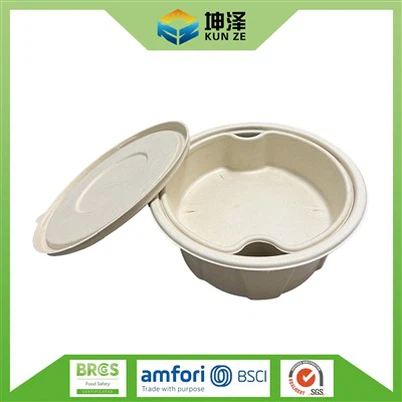
Bamboo Fiber offers a smoother, more refined surface. It often retains a natural "cream" or "light wood" tint that immediately signals "Premium" and "Organic" to the customer without you having to say a word.
Comparison Summary: At a Glance
| Feature | Sugarcane Bagasse | Bamboo Fiber |
| Material Origin | Agricultural waste (Sugar byproduct) | Fast-growing woody grass |
| Durability | Moderate (Best for light/medium use) | High (Heavy-duty/Industrial use) |
| Grease Proofing | Good (with coating) | Excellent (Natural density) |
| Surface Texture | Rough/Paper-like | Smooth/Premium |
| B2B Value | Cost-effective for high volume | Best for brand premiumization |
The Verdict: Which should you stock?
If your clients are looking for the cheapest possible alternative to Styrofoam for light salads or burgers, Sugarcane Bagasse is a solid, eco-friendly choice.
However, if you are supplying high-end catering, meal-prep services, or supermarkets where "performance failure" (soggy trays) is not an option, Bamboo Fiber is the clear winner. It offers the structural security of plastic with the 100% compostable credentials of a plant.
Why Partner with a Specialized Bamboo Fiber Manufacturer?
At Liaoning Kunze Industrial Group Co., Ltd., we specialize in high-density bamboo fiber molding. Our trays are engineered to withstand high-moisture environments and heavy loads, ensuring your food looks as good when it arrives at the customer's door as it did in your kitchen.
Looking for samples for your next QC test? [Contact our export team today].