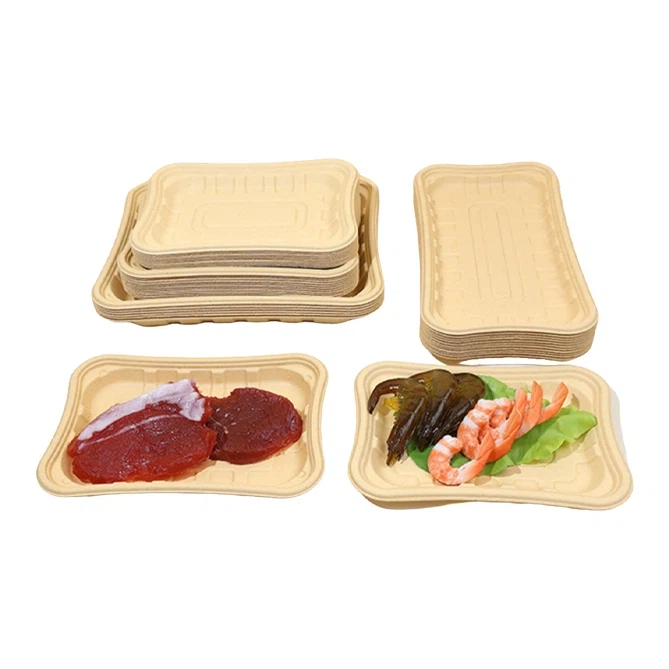
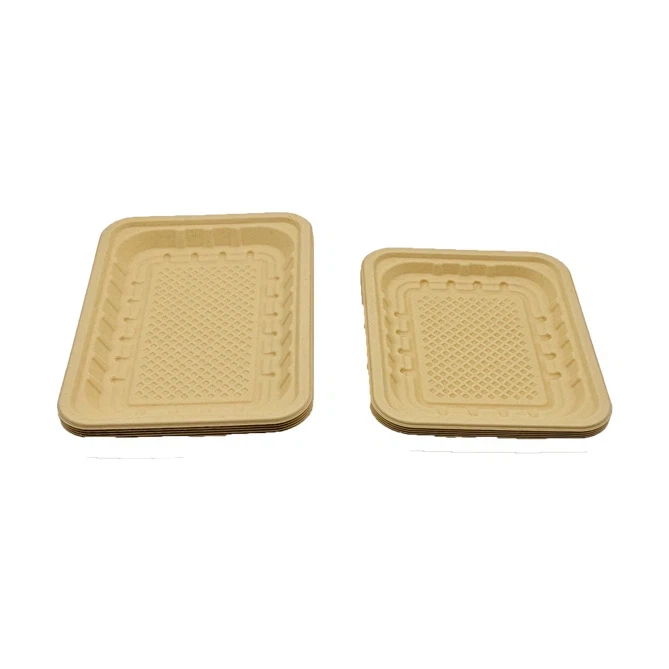
Bamboo Fiber Food Trays: The Sustainable Choice Revolutionizing The Food Packaging Industry
Leave a message
In an period of increasing environmental awareness and stringent plastic directions, the food packaging industry is experiencing a surprising change. Among different eco-friendly options, bamboo fiber food trays are rising as a prevalent arrangement, advertising unparalleled focal points in supportability, usefulness, and circular economy potential. As worldwide concerns over plastic contamination and carbon outflows escalating, bamboo fiber presents a compelling case for businesses looking for really maintainable packaging options.
The Carbon Footprint Advantage of Bamboo Fiber
When evaluating the environmental impact of packaging materials, carbon footprint-the total greenhouse gas emissions throughout a product's life cycle-becomes a crucial metric. Bamboo possesses exceptional carbon sequestration capabilities, actively absorbing carbon dioxide from the atmosphere as it grows. Research indicates that bamboo forests can absorb more than 15 tons of CO2 per hectare annually, making them highly efficient carbon sinks.
Compared to other plant-based materials, bamboo offers significant carbon reduction benefits throughout its lifecycle:
Rapid renewable capacity: Bamboo reaches maturity in just 3-5 years, much faster than traditional timber, and regenerates without replanting after harvest.
Lower processing energy: The manufacturing process for bamboo fiber trays requires less energy compared to sugarcane bagasse, which must undergo extensive processing to break down the rigid fibrous structure.
Efficient transportation: Bamboo's high yield per acre and lightweight nature reduce transportation-related emissions relative to its output.
A comprehensive carbon footprint assessment of bamboo products considers not only the emissions during production but also the carbon storage benefits throughout the product's entire life cycle. Unlike plastic, which releases carbon upon disposal, bamboo products maintain their stored carbon until they naturally decompose.
Superior Antibacterial Properties: Nature's Built-in Protection
Bamboo fiber possesses inherent antibacterial qualities that set it apart from other plant-based packaging materials. This natural protection stems from "bamboo kun," a unique antimicrobial bio-agent found within bamboo fibers. Scientific studies have demonstrated that bamboo fiber eliminates over 75% of bacteria within 24 hours , providing an additional layer of food safety without chemical treatments.
The microscopic structure of bamboo fiber contributes to its antibacterial efficacy:
Natural porosity: Bamboo fiber's cross-section reveals numerous oval pores that create a breathing surface, reducing moisture accumulation where bacteria thrive.
Bio-active protection: Unlike sugarcane bagasse which requires additional coatings for antibacterial protection, bamboo's defense mechanism is inherent to the fiber itself.
Chemical-free preservation: This natural antibacterial property extends food freshness while eliminating the need for synthetic preservatives or coatings that could compromise compostability.
Beyond Biodegradable: The Compostability Edge
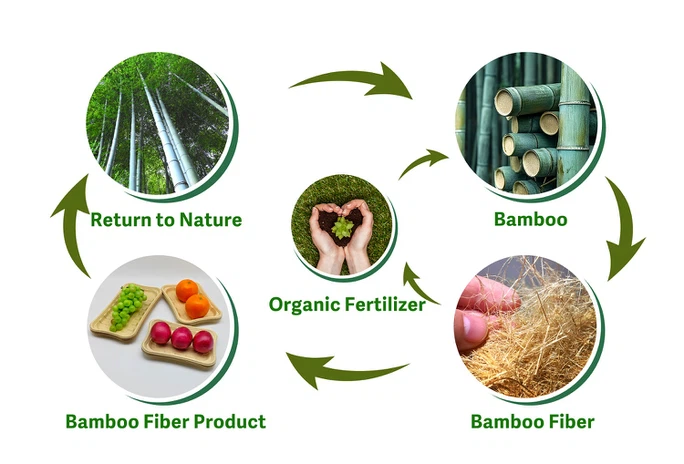
While many materials claim to be biodegradable, bamboo fiber trays offer genuine compostability, returning valuable nutrients to the soil rather than merely breaking down. The distinction is crucial: biodegradable materials simply fragment over time, while compostable materials transform into nutrient-rich organic matter that benefits soil health.
Bamboo fiber trays excel in compostability for several reasons:
Industrial composting compatibility: They break down completely within 45-90 days in industrial composting facilities, matching the efficiency of food waste decomposition.
Non-toxic decomposition: Unlike some bioplastics that may leave micro-toxins or residues, bamboo trays decompose into harmless organic compounds.
Soil-enriching properties: The resulting compost contributes to soil structure and fertility, completing the natural cycle.
Advanced technologies like micro-nano bubble treatment have further enhanced the degradation efficiency of bamboo fiber containers, resolving the conflict between the need for durability during use and rapid decomposition after disposal.
Bamboo vs. Sugarcane Bagasse: A Comparative Analysis
While both materials represent improvements over conventional plastics, bamboo fiber trays hold distinct advantages that make them more competitive:
Material sourcing: Sugarcane bagasse relies on agricultural by-products, which is commendable, but bamboo requires no agricultural land and can grow on marginal soils unsuitable for food crops.
Water resistance: Bamboo fiber trays demonstrate superior 48-hour leak resistance without synthetic coatings, outperforming sugarcane alternatives in practical applications.
Thermal stability: Withstanding temperatures from -20°C to 220°C, bamboo trays maintain structural integrity across freezing and heating scenarios, including microwave and oven use.
Resource efficiency: Bamboo generates more yield per acre with less water and no pesticides compared to sugarcane, creating a lighter environmental footprint.
Market Trends and Global Adoption
The global plant fiber tableware market is projected to grow from $1.456 billion in 2024 to $2.47 billion by 2031, reflecting a compound annual growth rate of 7.8% . Within this expanding market, bamboo fiber products are gaining significant traction across multiple sectors:
Food service industry: Major international events including the G20 Summit and university games have adopted bamboo fiber tableware as part of their sustainability initiatives.
Retail and e-commerce: Brands seeking authentic environmental credentials are increasingly choosing bamboo over other alternatives to meet consumer demand for genuinely sustainable packaging.
International markets: European and North American importers are showing increased interest in bamboo fiber packaging, particularly with the implementation of carbon border adjustment mechanisms that favor low-carbon alternatives.
The "Bamboo as Substitute for Plastic" Initiative
The "Bamboo as a Substitute for Plastic" initiative, co-sponsored by China and the International Bamboo and Rattan Organization, has gained international recognition as a practical approach to reducing plastic pollution and addressing climate change. This global endorsement underscores bamboo's potential in the broader sustainability landscape.
Research and development in bamboo fiber packaging continues to advance, with institutions like the International Bamboo Center developing automated production technologies that enhance both efficiency and performance. These innovations are making bamboo fiber trays increasingly competitive with conventional alternatives on both performance and cost.
Conclusion: Embracing a Sustainable Future with Bamboo Fiber Trays
Bamboo fiber food trays represent more than just an alternative packaging solution-they embody a comprehensive approach to sustainability that addresses carbon reduction, waste management, and circular economy principles. With their superior antibacterial properties, negative carbon footprint potential, and genuine compostability, they offer food businesses an opportunity to align with environmental values without compromising performance.
As plastic regulations tighten globally and consumer preferences shift toward authentic sustainability, bamboo fiber trays stand poised to lead the transition toward truly sustainable food packaging. For businesses looking to make a genuine environmental statement while meeting practical packaging needs, bamboo fiber offers a solution that satisfies ecological concerns, functional requirements, and economic practicalities.