The Rising Star of Sustainable Packaging: Market Outlook for Straw Material Egg Boxes
Leave a message
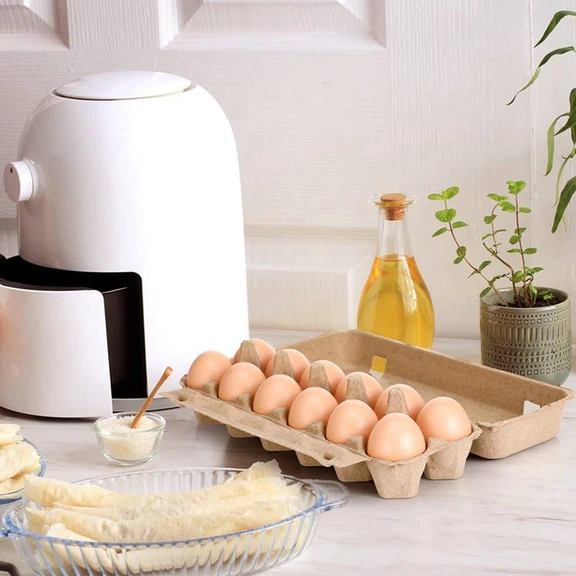
For eco-conscious brands and retailers looking for planet-friendly packaging, straw-based egg boxes are rising as a game-changer. Picture this: rural squander changed into defensive, biodegradable cartons that meet booming worldwide request for feasible arrangements. With plastic bans growing and circular economies quickening, this specialty is poised to explode-and early movers stand to capture significant market share. Let's unload the information, drivers, and strategies to use this opportunity.
Policy Tailwinds & Regulatory Shifts
Governments are aggressively incentivizing agricultural waste reuse. China's 2023 Air Quality Improvement Action Plan mandates raising straw utilization rates-already at 89.8% nationally-by optimizing collection systems and industrial applications. The EU's Single-Use Plastics Directive (SUPD) penalizes polystyrene foam, while Canada's zero-plastic-waste strategy prioritizes compostable alternatives. These policies create fertile ground for straw pulp packaging, especially for export-focused manufacturers.
Supply Chain Evolution: From Waste to Worth
The straw supply chain is maturing rapidly, yet challenges persist:
Upstream: Straw collection relies on mechanized baling (e.g., wheat/rice residues). In China, new subsidies are scaling hub-and-spoke collection networks, cutting logistics costs by 30%.
Global Demand Hotspots & Buyer Preferences
Trade data reveals surging interest:
Europe: Germany and France lead adoption, with straw egg box imports up 42% YoY (2024–2025). Buyers prioritize certifications (OK Compost, FSC) and MOQs under 20,000 units.
North America: US organic grocers (e.g., Whole Foods) seek cost-competitive alternatives to molded fiber, targeting price points ≤$0.15/unit.
Asia-Pacific: Japan/South Korea favor premium designs (e.g., embossed logos, color options) for retail-ready packaging.