The Packaging Shift: How China's Carbon Goals Are Reshaping the Industry
Leave a message
If you work in packaging, sourcing, or sustainability, you've felt the change. The pressure to move away from plastic is no longer a gentle nudge-it's a global mandate. For businesses outside China, understanding the "Dual Carbon" policy (peaking emissions by 2030, carbon neutrality by 2060) isn't just about compliance; it's about spotting opportunity.
This isn't another policy brief. Let's talk about what's actually happening on the ground-the materials, markets, and real-world solutions leading this change.
✅ Why Agricultural Waste Is Suddenly a Hot Topic
Walk through any major Chinese industrial park today, and you'll see something unexpected: piles of straw and agricultural residue being turned into packaging. This isn't recycling; it's upcycling.
One of the most practical outcomes? Straw pulp molded products-like our egg trays and cartons.

Why it works: Straw is abundant, cheap, and traditionally burned as waste-releasing CO₂. Now, it's processed into sturdy, biodegradable packaging.
Performance: These trays offer shock absorption and breathability comparable to foam, but they break down in weeks, not centuries.
Global appeal: European and North American supermarkets increasingly prefer such solutions for eggs, fruits, and wine packaging.
It's a classic case of turning a waste problem into a supply-chain solution.
✅ Bamboo Fiber: The Unsung Hero of Fresh Produce Packaging
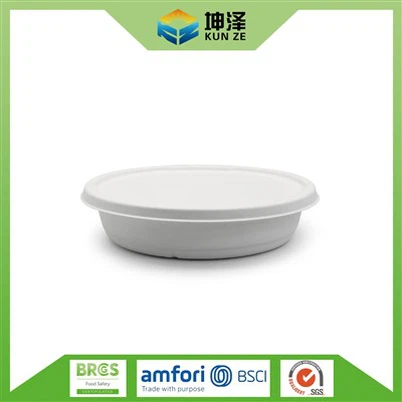
Another material getting serious traction is bamboo. Fast-growing, naturally antimicrobial, and incredibly strong, bamboo fiber is ideal for fruit and vegetable trays.
We've seen a 300% increase in inquiries for our bamboo fiber-based packaging from overseas buyers in the past year. Here's why:
Thermal resistance: It performs well in cold chain scenarios.
Consumer perception: Bamboo signals "premium" and "natural" to end-buyers.
Certifications: Products like ours are already compliant with FDA, EU 10/2011, and other international food-contact standards.
Companies in Germany, the UK, and Australia are using these trays for berries, mushrooms, and delicate fruits-often reducing food waste thanks to better moisture management.

✅ Beyond Materials: The Tech Making It Scalable
Adopting new materials is one thing; producing them efficiently is another. Advanced molding systems-often using AI-driven heating and pressure controls-now produce biodegradable packaging at speeds matching traditional plastic forming.
Energy consumption in production has dropped nearly 30% in 3 years, making sustainable options increasingly cost-competitive.
✅ What This Means for International Buyers
If you're sourcing packaging:
Diversify responsibly: Don't just replace plastic-choose materials that tell a story. Straw and bamboo do that.
Plan for regulations: Bans on single-use plastics are spreading from the EU to Southeast Asia. Early adopters are winning.
Think carbon footprint: Many of our clients now request LCA (Lifecycle Assessment) reports. Ours show up to 60% lower CO₂ vs. PET or EPS.
🌍 The Bottom Line
The "Dual Carbon" policy isn't just changing China-it's reshaping global supply chains. Packaging isn't a sidenote anymore; it's a central player in decarbonization.
Whether you're a retailer, a food brand, or a trading company, now is the time to lock in reliable sources for future-proof packaging.
Ready to see how straw or bamboo packaging can work for your products?