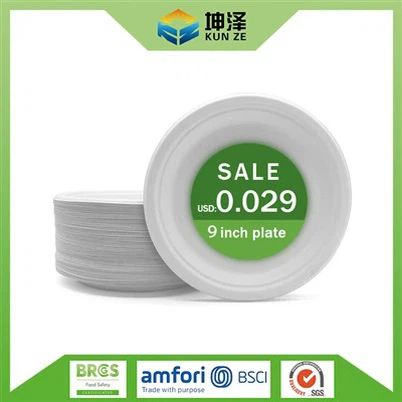
Tableware made of PLA material
Leave a message
With the continuous improvement of environmental awareness, green and sustainable development products are gradually favored by the market. Tableware made of polylactic acid (PLA) material is becoming a popular choice in the field of disposable and reusable tableware due to its environmental protection and degradable characteristics. This article will conduct an in-depth analysis of PLA from the aspects of definition, characteristics, application advantages, production process and market prospects.
1. Introduction to PLA material
PLA (Polylactic Acid), Chinese name for polylactic acid, is a bio-based plastic made from starch in renewable plant resources such as corn and sugarcane through saccharification, fermentation and polymerization. It has good biocompatibility and biodegradability, and is a typical green and environmentally friendly material.
2. Characteristics of tableware made of PLA material
Environmentally friendly and degradable:
PLA tableware can be completely degraded into carbon dioxide and water under industrial composting conditions, which is harmless to the environment and in line with the global "plastic ban" trend.
Safe and non-toxic:
PLA is derived from natural plants, does not contain harmful chemical additives, does not produce harmful substances, and meets food safety standards.
Good physical properties: PLA tableware has certain heat resistance, oil resistance and mechanical strength, which can meet the needs of different dining scenarios. Good appearance and texture: Due to the transparency and natural gloss of PLA, the tableware has a beautiful appearance and strong plasticity, which is suitable for diversified designs.
3. Production process of PLA tableware
Raw material preparation: Plant raw materials such as corn and sugar cane are saccharified and fermented to produce lactic acid. Polymerization process: Lactic acid undergoes polycondensation reaction to produce oligolactic acid, and then forms polylactic acid through cyclization reaction. Injection molding/hot pressing: PLA particles are heated and softened, and processed into the required tableware shape through injection molding, blow molding or hot pressing process. Cooling and quality inspection: The finished product is cooled and shaped, and food safety and physical properties are tested.

4. Application scenarios of PLA tableware
Catering takeaway industry: disposable tableware, drink cups, straws, etc. Supermarket retail: portable tableware, children's tableware, environmentally friendly tableware sets. Outdoor activities: convenient tableware for picnics and camping.
5. Market prospects of PLA tableware
Against the backdrop of the global "plastic ban", the demand for PLA tableware continues to grow. According to data from market research institutions, the global PLA market is growing at a rate of more than 10% per year, especially in regions with strict environmental regulations such as Europe and the United States, where the PLA tableware market has great potential.
However, PLA tableware still faces challenges such as high production costs, heat resistance to be improved, and insufficient industrial composting facilities. In the future, with the advancement of production technology and policy guidance, the cost-effectiveness and performance of PLA tableware are expected to be further improved, promoting its wider application around the world.
6. Conclusion
Tableware made of PLA material, as a model of environmental protection and sustainable development, is gradually entering our daily lives. In the face of increasingly severe environmental problems, promoting PLA tableware is not only a trend in the development of the industry, but also an inevitable choice for social sustainable development.