Nissha and Tetra Pak develop aseptic milk carton with paper-based barrier coating
Leave a message
Nissha Metallized Solutions (NMS) and Tetra Pak have collaborated to develop an aseptic beverage carton based on a paper-based barrier coating, with paper sourced from FSC-certified sources.
NMS said its paper portfolio includes recyclable, renewable and mono-material solutions, utilizing paper from FSC-certified (FSC-C109768) forests and other controlled sources. These solutions are said to provide the required level of protection from the effects of oxygen and light by applying different coatings.
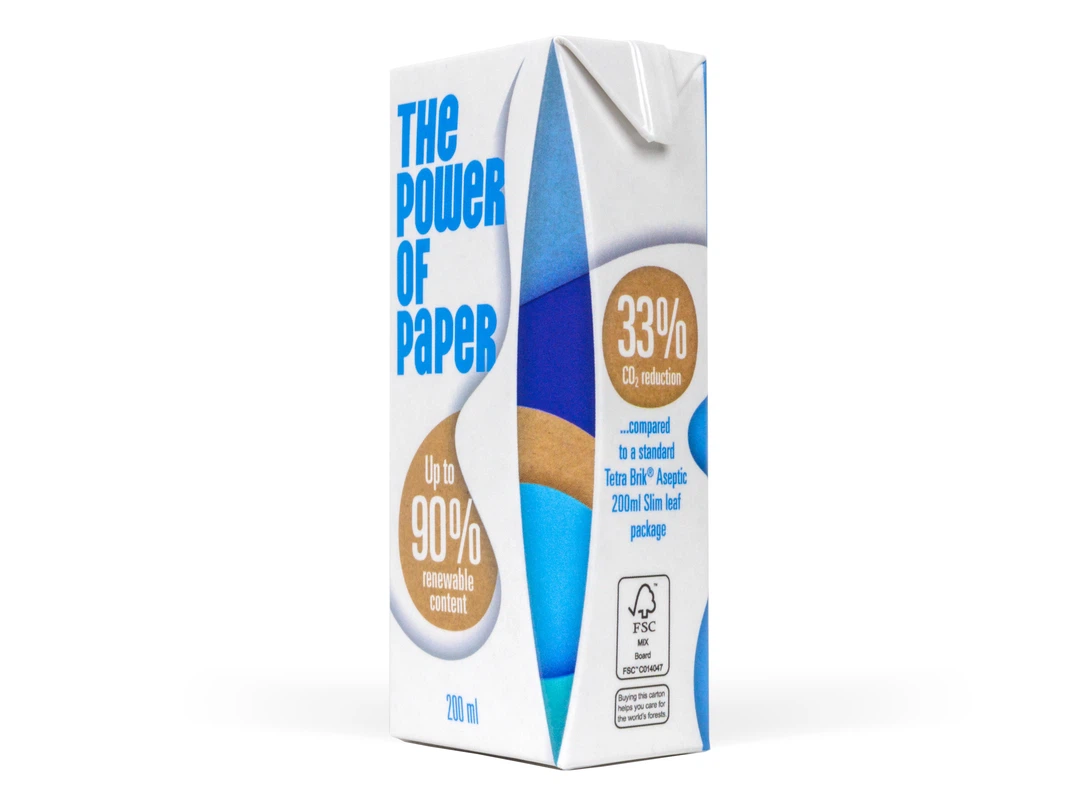
The company added that its products "reduce reliance on non-renewable resources" compared to barriers used in traditional aseptic cartons. Clearly, paper-based barriers are also expected to have downstream advantages, and cartons with higher fiber yields may be more attractive to paper mills.
In this context, NMS noted that paper-based barriers represent an opportunity for recycling infrastructure and its efficiency, as it changes the material structure of carton packaging from three main materials to two (paper and polymer).
Commenting on the paper solutions offered by Tetra Pak, Marco Marchetti, Vice President of Packaging Materials and Sales Distribution Systems at Tetra Pak, said: "Building on our current high share of paper in cartons, increasing the paper content of the carton to approximately 80%, when combined with plant-based polymers, the total renewable carton content increases to 90%, thereby reducing the carbon footprint by one-third (33%)."
In related news, last year Indian dairy company MilkyMist partnered with SIG and AnaBio Technologies to launch the "world's first" long-life probiotic buttermilk in aseptic carton packaging. The product is reportedly stable for long periods of time at room temperature, reducing food waste and energy consumption during storage and transportation.
Earlier this month, the Food and Beverage Carton Alliance (FBCA) launched a unified platform focused on promoting beverage cartons as a renewable and circular packaging solution. Formed from the merger of the Alliance for Beverage Cartons and the Environment (ACE) and EXTR:ACT, the alliance aims to expand beyond Europe to promote solutions that enhance food safety, reduce waste and advance a low-carbon circular economy.