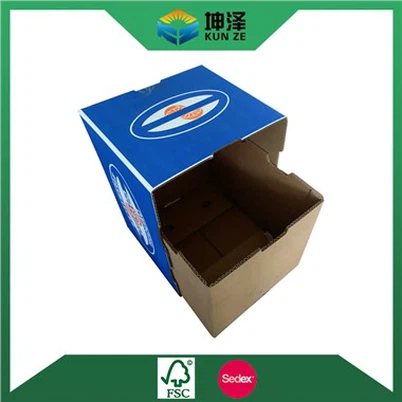
Material and grade of corrugated paper
Leave a message

Corrugated board, commonly known as cardboard, is a material composed of two flat liners and one corrugated medium. It is widely used in packaging due to its high strength, durability, and affordability. Corrugated board is made from different grades of paper, which determine its quality and purpose. This article will discuss the materials and grades of corrugated board, their properties, and applications.
Materials of Corrugated Board
The basic raw materials of corrugated board are paper and glue. The paper consists of two types of fibers, namely, long fibers and short fibers. Long fibers are obtained from softwood trees such as pine and spruce, while short fibers are obtained from hardwood trees such as eucalyptus and birch. The long fibers provide strength, while the short fibers provide resilience.
Glue is used to bond the paper layers together. It is made from starch, a natural product obtained from corn, wheat, or potato. Other additives such as resin, wax, and caustic soda may be added to improve the strength and waterproofing of the corrugated board.

Picture Source:Pinterest

Picture Source:Pinterest
Grades of Corrugated Board
The quality of corrugated board is determined by its grade. There are four main grades of corrugated board, namely, A, B, C, and E. Each grade is suited for a specific purpose.
Grade A: This is the highest quality grade of corrugated board. It has the highest strength and durability and is used for heavy-duty packing such as shipping boxes, storage containers, and industrial packaging. It is made from a combination of long and short fibers and has high resistance to moisture and humidity.
Grade B: This is a medium quality grade of corrugated board. It is used for light-duty packaging such as shoeboxes, cereal boxes, and clothing packaging. It has moderate strength and durability and is made from a combination of long and short fibers.
Grade C: This is a low-quality grade of corrugated board. It is used for low-cost packaging such as fruit and vegetable boxes, and consumer goods packaging. It has low strength and durability and is made from short fibers. It is not recommended for heavy-duty packaging.
Grade E: This is a double-walled corrugated board. It has two corrugated layers and three flat layers, making it the strongest and most durable type of corrugated board. It is used for heavy-duty packaging, such as machinery and equipment packaging.
Properties and Applications of Corrugated Board Grades
Grade A: This grade is the most versatile and widely used grade of corrugated board. It is strong enough to withstand heavy loads and is highly resistant to impact and moisture. It is often used in the logistics and transportation industry for shipping and storage. It is also used in the wine and beverage industry for packaging glass bottles.
Grade B: This grade is lightweight and easy to handle. It is commonly used in the food, cosmetic, and retail industries for packaging. It is often used for point of purchase displays, such as countertop displays and shelf-ready packaging.
Grade C: This grade is ideal for low-cost packaging. It is often used for produce packaging, such as fruit and vegetable boxes. It is lightweight and easy to recycle, making it environmentally friendly.
Grade E: This grade is designed for heavy-duty packaging. It is ideal for transporting machinery, equipment, and heavy goods. It is strong enough to withstand rough handling and is highly resistant to impact and moisture.
Corrugated board is a versatile and cost-effective material that is used in various industries worldwide. The quality of the corrugated board is determined by its grade, which indicates its strength and durability. Grades A and E are the strongest and most durable grades, suited for heavy-duty packaging. Grades B and C are used for light and low-cost packaging, respectively. By understanding the materials and grades of corrugated board, businesses can make informed decisions about their packaging needs and ensure that their products are protected during transportation and storage.