ESG Isn't a Buzzword. It's Your New Business Reality. Here's Why.
Leave a message
Let's be honest. A few years ago, "ESG" was a term you might have heard in a boardroom, something for the big corporate players. Not anymore.
Nowadays, it's the dialect of worldwide commerce. And in the event that you're within the business of sourcing, fabricating, or offering items, it's a conversation you can't bear to disregard. For us within the sustainable packaging space, ESG isn't just a system; it's the story we've been living and breathing all along.
Cutting Through the Jargon: What on Earth is ESG?
Simply put, ESG-Environmental, Social, and Governance-is how the world measures a company's character. It's the answer to the question: "Are you a good business, beyond just making money?"
Investors use it to gauge long-term risk. Consumers use it to decide who to trust. And businesses like yours use it to build a brand that lasts.
Let's break it down, not with textbook definitions, but with what it means for you on the ground.
1. The "E" (Environmental): It Starts With Your Packaging
This is the most intuitive part for us. The "E" looks at your company's footprint on the planet. But it's more than just "being green." It's about a systemic approach to how you source, produce, and dispose.
Think about the last shipment you sent out. What was it packed in?
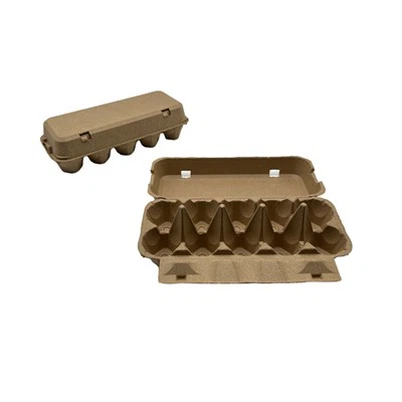
When you choose molded pulp egg cartons made from straw or paper pulp, you're actively using agricultural waste instead of sending it to burn. That's a closed-loop system.
When you opt for sugarcane bagasse clamshells, you're turning a residual product from food production into a durable, compostable package. That's resource efficiency.
When you select bamboo fiber containers, you're leveraging a grass that regenerates in months, not the decades trees require. That's sustainable sourcing.
This isn't just marketing. It's a direct, tangible contribution to your Environmental score. It's about making choices that decouple your growth from environmental harm.

2. The "S" (Social): The Story Behind the Supply Chain
This is where it gets deeper. The "S" forces us to look at the human element in our operations. It asks: How do you treat your people? What are the conditions like in the factories you partner with?
For a brand using our recyclable fruit crates or paper boxes, the "S" is about assurance. It's about knowing that the materials weren't produced with forced labor, that factory workers are paid fair wages and operate in safe conditions, and that your entire supply chain strengthens, rather than exploits, local communities.
Your packaging choice is the final, visible output of a long chain of social interactions. The "S" ensures that every link in that chain is strong and ethical.
3. The "G" (Governance): The Glue That Holds It All Together
This is the least visible but arguably the most critical pillar. Governance is the internal rulebook. It's the commitment to doing things right, even when no one is watching.
It means having clear policies on ethics, transparency, and accountability. It's about having a board that asks tough questions: "Can we prove our packaging is as compostable as we claim?" "Are we accurately reporting our reduction in plastic use?" "Do our executive incentives align with our long-term sustainability goals?"
Strong Governance is what gives your customers and investors confidence that your "E" and "S" claims are genuine and backed by action.
Why This Matters for Your Bottom Line
You might be thinking, "This sounds like a lot of work." It is. But the ROI is real.
Market Access: Major retailers and European importers are now mandating ESG disclosures. Good ESG credentials are becoming your ticket to enter these markets.
Consumer Trust: A 2023 study by NielsenIQ showed that brands with clear sustainability claims consistently outperform those without. Your packaging is the first physical touchpoint of your brand's values. Make it count.
Investment Appeal: There's over $30 trillion in ESG-focused assets under management globally. Investors are actively funneling capital into businesses that demonstrate responsible practices.
The Bottom Line
Switching from plastic to a bamboo fiber container isn't just a product swap. It's a powerful ESG data point. It speaks to your environmental stewardship, hints at a responsible supply chain, and reflects a governance structure that prioritizes long-term viability over short-term cost savings.
This is the new height of business. It's no longer about just selling a product. It's about standing for a principle. And in today's world, that's the most powerful packaging of all.