Beyond the Carton: Why We Chose Bamboo Pulp Trays for Our Eggs
Leave a message
Here at Liaoning Kunze Industrial Group Co., Ltd., we get questions about our packaging almost as much as our products. Why the move from plastic or recycled paper? Why bamboo? It wasn't a decision we made lightly. After testing countless options, bamboo pulp egg trays consistently came out on top. Let's break down the real-world benefits we've observed, beyond just the "eco-friendly" label.
1. It Starts with a Smell Test (Seriously)
Open a box of eggs in plastic or foam trays on a warm day, and you might get a whiff of... something. Trapped moisture and lack of airflow create a perfect environment for odors. The first thing we noticed with bamboo pulp trays was how inherently breathable they are. The natural fibrous structure allows air to circulate, which significantly reduces condensation and any associated smells. This isn't just about comfort; it's a genuine factor in preserving product freshness longer.
2. Protection That Doesn't Cost the Earth
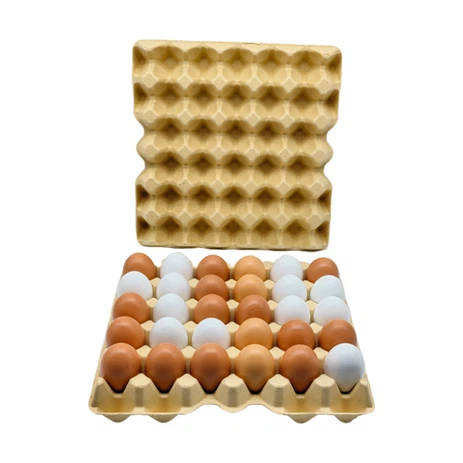
Our number one job is to get every egg to your kitchen intact. While many materials offer protection, bamboo pulp does it with incredible rigidity. The molding process creates a custom-fit cradle for each egg, but it's the material's natural slight flex that absorbs shock during shipping without cracking itself. We've seen a measurable drop in breakage rates since switching. It's protection that's both tough and graceful.
3. The Moisture Question: A Practical Look
Yes, pure pulp is susceptible to moisture. That's the elephant in the room. However, high-quality bamboo trays aren't just plain pulp. Many are now treated with a minuscule amount of food-safe, biodegradable coating (like PLA from cornstarch) that significantly boosts moisture resistance without compromising compostability. It's a smart, practical compromise that makes them viable for a wider range of climates and supply chains.
4. The "Feel" Factor: Building Trust on the Shelf
There's a psychological element to packaging. A flimsy plastic clamshell feels cheap. A sturdy, textured bamboo tray has a certain heft and rustic authenticity. Customers pick it up and instantly feel they're holding a premium, natural product. That subconscious trust is powerful. It tells a story about your brand's values before the customer has even read a word.
5. The Real Environmental Win: End-of-Life Scenario
"Biodegradable" is a great term, but what does it actually mean? For us, the clincher was the end-of-life simplicity. A recycled paper tray needs industrial composting. A plastic tray needs... well, who really knows? A bamboo pulp tray can break down completely in a home compost bin in a matter of weeks, returning to the soil. This gives the consumer a clear, easy, and rewarding way to dispose of it responsibly. That closed-loop cycle is the ultimate goal.
The Bottom Line for Businesses
Switching isn't just a PR move. There's a tangible ROI. While the per-unit cost might be slightly higher than plastic, you're investing in:
Reduced breakages: Saving product saves money.
Brand differentiation: Standing out in a crowded market.
Future-proofing: As plastic regulations tighten, you're already ahead of the curve.
We didn't choose bamboo pulp because it's a trend. We chose it because it's genuinely better-for the egg, for the customer, and for the planet. It's one of those rare choices where the right thing to do is also the smartest.